jueves, 9 de junio de 2011

Women empowerment or lettuces in your balcony?

I am unsure if I have truly explained what I am doing in this project. I guess the story has to do with a quite successful consultant that one day decided that his comfort zone was asphyxiating him. So he quit his well-paid job, gave up his nice apartment with an astonishing view at the city of hope (Mexico City of course), his car, his furniture and the most important: left a girl that seemed to be perfect for establishing a head (literal translation of sentar cabeza in mexican). These sacrifices were made hoping to make a better impact in the world. My major desire is that when my grandchildren ask me why the world changed so much in my lifetime and I explain the reasons I can answer to the terrible question of: "And what did you do to prevent it from happening?" with a convincing response.

The purpose of my actual studies is to understand the complex systems of human-natural interactions in the road towards development. Specifically the multiple challenges in each sector and how these challenges are all interconnected in a complex manner, meaning that you can have positive and negative feedbacks that intensify small changes in one variable.

If I eat one more plantain I will truly go crazy.
My project has to do with the use of GIS to provide a cross-sectoral decision-support analysis that helps answer some questions in this development aid project (not to be confounded with a humanitarian effort). The idea is that by orchestrating a set of proven interventions we can provide sufficient traction to a community to lift herself out of the vicious cycle of generalized extreme poverty.

When I first came to Columbia I was completely focused on Urban Agriculture and appropriate self-sustaining technologies that should help us produce all of our needs in a grassroots initiative. I remember one of my first conversation with one of my colleagues was that the single most important thing was women empowerment and girl education. I was shocked by this idea, a single magic bullet sector could solve things in the short-run. I argued back that for me there was no single intervention and that increased agricultural yields where in any case more important than who goes to school. WIthout food it doesn't really matter that you are teaching them how to use wikipedia.

The reaction was: "So basically you are comparing lettuces with women".

School garden with lettuces. Girl enrollment has also increased thanks to a couple of interesting interventions. The answer is women and lettuces... and men and tomatoes.. and maps?
What do you answer in this situation? I just sighed and thought that there is very long road to walk to be able to talk openly about gender issues.

I like women and I like lettuce but if god had wanted me to eat that much lettuce he would have made me a rabbit.

Anyway, those that achieve food and water self-sufficiency have a much greater resilience too any socio-natural disaster.


So start growing your own lettuces...

P.S. By the way we have been without water for two days already...

miércoles, 8 de junio de 2011

About risk aversion, motorcycles and discount factors

Economists assume that in general individuals are risk adverse by nature, that is they will prefer a certain outcome to a probabilistic scenario in which they might win or loose. There is an equation that allows to determine at which point individuals will rather play the game and risk their wellbeing and when they will not play and keep the safe outcome.

Over the past few days I have came to the realization that the level of risk aversion is not personal but geographical. Indeed it seems that in the developing world people  care less about the really bad outcome, taxis are inexistent here and all there is are motorcycles that drive like mad men everywhere. They usually have no permits, no helmets, the bikes are falling apart and they think they are running the Paris - Dakar (that is now in Argentina due to crazy motorcycles jumping in the track in the eurafrican side of the world...) and yet they are quite convenient. You just yell boda boda, tell him where you want to go and how much he will charge you (usually you try to halve the munzungu price). And you hop on in behind, grab something and expect that the very high rate of accidents that occur will hit the guy in front or behind you. But this is something I would never do in New York or in Mexico. 

So why do I do it? Is it because I value less my life when I am in Africa? Is it because there are not many other options? Is it because you figure that if that grandma can do it why shouldn't you? Is it thirst of adventure? Is it because it's super cheap? Is it plain stupid stupidity?

No matter why it turns out that foreigners tend to take more risks as the levels of development go down. Would it be the same the other way around? What if you teleported all Mbararians to the USA and offered them health insurance (assuming they could pay it without important sacrifices), would they purchase safety and peace of mind? Or would they culturally act different and not get the insurance?

Let's assume it is not a cultural decision. What if Ugandans in the USA bought insurance and United Statians (Because America IS a continent while Africa IS NOT a country) in Uganda would ride Boda Bodas. This would mean that there is something about the natural/social environment in the geographical locations that reduces the risk adversity of individuals.

If you've read this far you might say: "What is your point?"

My point is the following, economists are debating if acting again climate change is economically efficient. To decide if the investment in mitigation strategies are worth the effort, they are using the discount factor [see post], indeed a shilling today is worth more than a shilling tomorrow. So the discount factor is the extra amount you will have to increase my consumption in the future for me to sacrifice one unit of consumption in the present. Indeed we tend to value more the present than an uncertain future. So w\William Nordhaus and Lord Nicholas Stern, two important economists, have tried to evaluate the costs of action versus the costs of inaction in reference to the threat of climate change. Each one has set their own estimate for the discount factor and they have made extense calculations to try an emit a recommendation on the future of humanity. But if risk aversion changes from country to country and even inside a country, then probably the value of the present over the future is different inter and intra nationally. If different groups of people have different levels of discounting  the future across the globe. This means that economists are oversimplifying the issue at hand. Would it not be necessary to take the different discount factors, weight them according to population and then make an estimate of the result of the cost-benefit analysis to make this decision that will affect the whole world?

I guess most economical models need a little revamping into the era of mass data analysis so that many of the oversimplifications made because of a lack of computing power should be revisited to truly model the homo economicus complex system and try and find better tools to predict the future and make policy decisions.

This thoughts come to me as I come back from visiting the rural area where the project I will be working on is based. The area is really poor and I truly find myself revisiting my argumentations on sustainable development and poverty alleviation. The human specie is indeed complex and very simple at the same time, my conclusions are the same:
Ruhiira, Uganda. The green is Matoke/Plantain/PlatanoMacho, deforestation has been severe. Imagine no roads, no hospitals, no access to markets, no clean water, no sanitation, no schools, no nothing a couple of years ago...

1- We need to reduce population growth
2- We need to shift from non-renewable resources to renewable rational use of resources and improve efficient use of resources with technology and internalizing the social and environmental externalities of economic growth
3- We need to stop having blind faith in the market based approach and acknowledge that markets do tend to fail and lead to inefficient outcomes
4- We need to reduce inequalities in life opportunities amongst humans --- inter and intra country
5- We need to start valuing ecosystem services and protecting common goods

This guys were really excited to say hello. 
6- we need a new framework for planetary governance (UN revamp)

Tomorrow I promise I will finally explain what I am doing here and what exactly I will be working here.

Stay tuned...


martes, 7 de junio de 2011

Order 1,2,3

The lack of scientific approach to problems has a pervasive effect on the decisions we make. Opinion based decisions are one of the elements that can most harm any organization of project. In order to take a decision we usually have to compare among different alternatives. Money, time and other resources are limited and require to be consumed with adequate prioritization.

The past few days I had a couple of strong discussions that almost made me loose my temper. I have been wanting to write this post for a very long time and the expectations have risen so much that I will never actually write it with the quality and depth it requires. The original idea comes from my father, I tend to bounce my ideas and dilemmas with him, especially discussing the future challenges faced by humanity and he usually asks me if the problem or solution I am talking about is order 1,2 or 3. This approach has been very useful in prioritizing and detecting irrelevant arguments that people tend to defend. Instead of giving a long explanation I will give two examples about what I mean with this.

The other day I was talking about the carbon footprint and the issues around GHG emissions (because it is obviously a subject I don't think about often). I was talking to a very environmental-wise person who was mentioning how he was almost totally sustainable, the person was judging my meat eating habits. At some point in the conversation he mentioned that he took 20 planes in the past year. I couldn't help but giggle at his efforts to reduce his emissions. He came back at me saying that since I smoke cigarets the discussion was over. Was it?
What are the orders?

20,000 Kf air travel = 7 T CO2 per year
Eat meet in 90% of your meals = 2 T CO2 per year
Smoke 1 pack per day = 0.197 T CO2 per year
You can decide orders. I know there are other externalities that I am not considering in these products but I like how illustrative this example is. Really care about the environment, stop flying, don't become a vegetarian.

The second topic is about malaria and bed nets, 300 Million cases of malaria happen every year around the world, A very large number occurs in south saharan africa. The health, education and economic impacts of this situation are severe, a study suggests that countries with endemic malaria n the developing world have a annual GDP growth 1.3% less than countries that do not suffer from this problem but have similar situations. Until recently the donor organizations would only provide free bed nets to pregnant women and small children under the argument that if you give it for free to everyone you will be promoting market inefficiencies and promoting lazy behaviors. But other actors differed and argued that in this particular case it made sense to give free bed nets to every poor household, this would cut the transmission rates and effectively end endemic malaria in these areas because of a hoard effect (less people infected means less parasite available for the mosquito to pass it on). While having this discussion, my interlocutor came with an argument that she had probably read in one of those poor blogs that only try to criticize any development intervention. Providing bed nets for free is bad because you are destroying the bed net industry of sub saharan africa. I don't know if you are puking or saying hey that might be right. Let me explain:

It is true that we you provide free or subsidized imported goods in a country where those goods are produced you create an effect of unfair competition that reduces the profits of the companies and can lead to their bankruptcy. An example are the exports of surplus corn from the USA that were produced with government subsidies. Dumping if you like. This is the perverse effect that free trade agreements have sometimes when there are production subsidies in a country.

But...

Come on, the bed net industry? What percent of the national GDP does the bed net industry accounts for? How many people work in this industry? What is the income impact on the population?

Compared to reducing the amount of sickness days and lives lost to Malaria, is this really comparable? The conversation with this person was over afterwards.

Order 1,2,3...

Hope it makes sense.

The free rider dilemma

There are several types of goods that we humans usually consume. They can be divided into four major categories, goods can be rival or non-rival, they can also be excludable or non-excludable. The typical good is the rival and excludable, for example cookies, if I have a cookie and eat it it means you can't eat it any more. If I have the cookie it means you don't have it. Easy as pie...

But things get more complicated, for example a sunset is a non-rival non-excludable good, if I consume it you can also consume it without it running out. I can't protect you from having access to the sunset so it is non-excludable. Usually you can't make business with this type of good. I love this kind! Roads would fall into this category assuming there is no traffic.

Then you have excludable, non-rival goods, these are interesting, you can only have access to the good if you are member of a "club" but the good does not run out. For example a network of ex-alumni is one example of this type. Going to Columbia university gives you access to an amazing network of people you probably would not be able to access if you did not study there.

And then...

The big problem. Goods that cannot be excluded but that are rival. The common goods. These goods are available to every one but they run out if used in excess. For example: fisheries, pastures, forests, rain or the atmosphere. The problem is that since everyone owns the ressource and it runs out, the incentive in a world of game theory (individualistic, maximizing profit type) the best response is to consume as much as you can. If you don't cut that tree today someone else will and leave you with reduced profit. This idea is recognized by Garret Hardin in his 1968 article "The tragedy of the commons". Climate Change is the perfect example, we share the atmosphere, we release CO2, if I limit my emissions I affect my growth and other countries will still emit, maintain their growth and affect my climate. The "rational" response is to not reduce emissions.

UNDP Intern House. AKA Big Brother Uganda


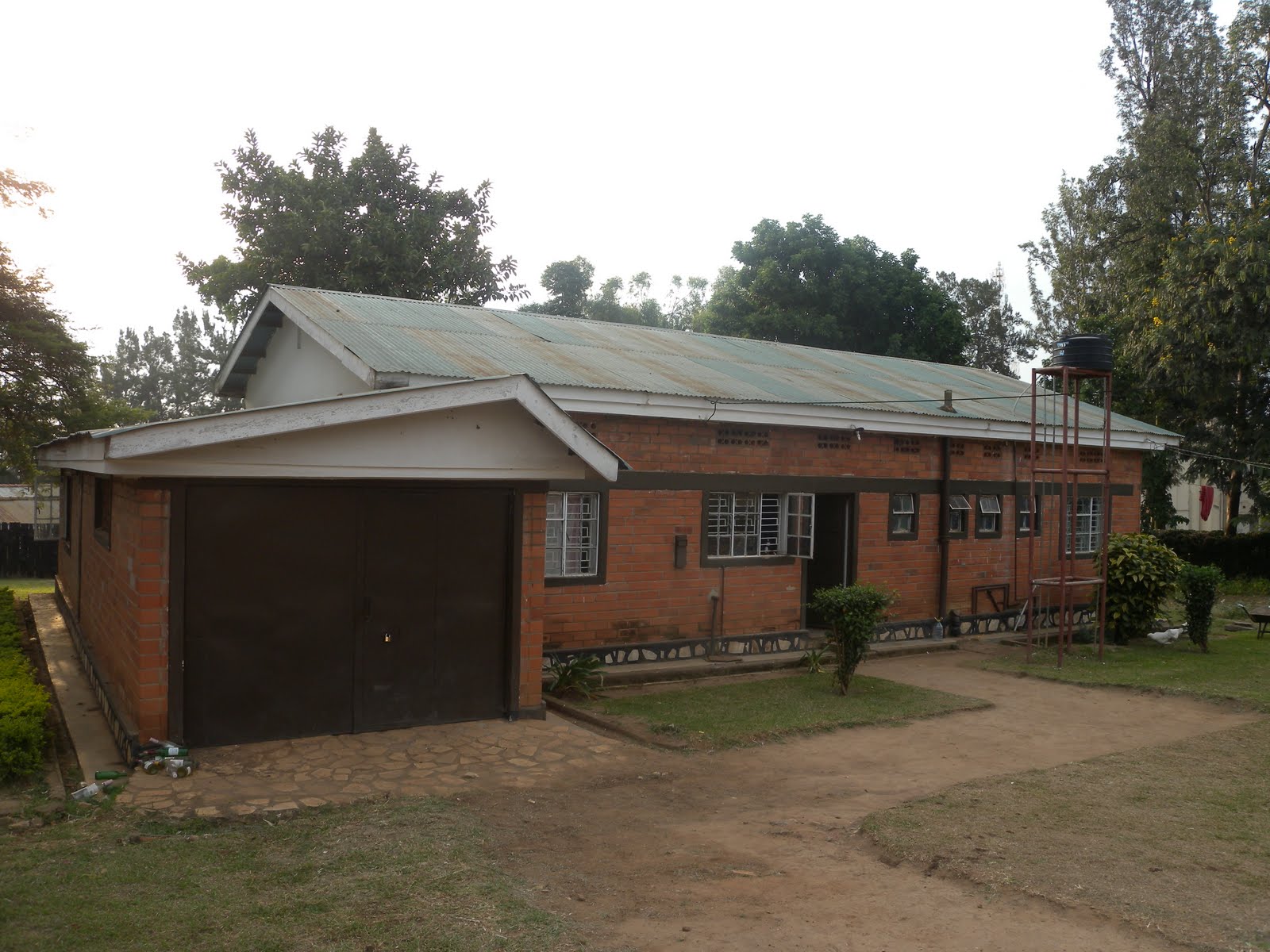
I will be sharing the UNDP intern house with 7 other people and we are sharing quite a large amount of goods. Water, gas, a bathroom, the fridge, cleaning. The first day in the house I asked the veterans (who usually due to their time in the house have more experience and rights than the rest of us: better rooms, better bed nets, better furniture) what the rules of the house were. The current chief of the house told me there where not rules, everyone just did what he thought would be more adequate, so I asked if they did not fear that the showering schedule would be a problem, or if the limited amounts of water wouldn't be rapidly exhausted if we did not set some limits. Also who would clean the bathroom? The answer is that they did not had any problems before.

I will exaggerate the situation for the purposes of this blog, anyhow if you read this far you are used to my style of writing and now I tend to exaggerate and play devil's advocate.

As a result for the past few days we are all rushing to the toilet from 6:30 to 7:30 to see if we can get the next spot under the shower. A bit inefficient... But what has started to worry me is the water availability, before we came the house had an average of 4 interns at any time, now we are 8. The first day I did the effort of showering in three minutes, turn the water off to put soap and shampoo and tried to wash the dishes with as little water as I could. But I have been observing the water practices of the others and realize that unless we set rules it is not worth to make such sacrifices. So today I took a nice shower of 4 minutes without turning the water to soap and shampoo myself.

This afternoon we ran out of water... A disaster in a toilet for 8 people, especially if it lasts more than a couple of hours. We could not cook, we had to eat out tonight. When we were coming back one of the guys that has been longer in the house mentioned we might want to get a bigger tank of water...

Micro tank of water.
I guess you could either see our situation as anarchy or maybe community management of resources, in any case the free rider threat looms over us now. I have been leaving with roommates for the past four years and up to now it has worked quite fine. But 8 people in the Big Brother house might be a little bit too much for my non-planning strategy. Two experiments under way:
1- Left my toothpaste in the bathroom - let's see if someone else finds it convenient to use it instead of buying their own.
2- I am really intrigued to see who will be the first to clean the bathroom and his motivations to it, as our cleaning/working for others limits are reached by each one of us, I wonder how long will pass until we make a bathroom cleaning schedule. Until then I will be analyzing the free rider dilemma on this aspect.

I am a terrible cook, so I have offered to do the dishes as often as needed (I am not the only free rider in the cooking sector), I hope that my wonderful cook colleagues consider my specialization useful (a specialty that is very hard to defend, computers, GIS and economics are quite useless in this situation, and black humor has little value also).

Oh! The water is back, I hope I can use it, I have to run... Drank too much beer (that it seems we never run out :))

domingo, 5 de junio de 2011

Versus

I am lying on my bed in Kampala city, the power just went off! Kibale Buzibo (No problem in Lugandan). It is just like those nights in Mexico right before the delivery of a project for school. You can't do anything. You get the candles from the kitchen, and think about the lives of previous generations and how they coped with life before electricity and in general cheap energy. I wish I was doing that right now, but the fan went off also and now it is kind of a furnace inside my mosquito net (adding some mexican exaggeration to the situation). 

Tomorrow the road into Terra Incognita will really begin, tomorrow I will travel to Mbarara, the second largest city in Uganda, some four hours west towards the famous rift valley. Nervousness is back, not only of what I will find over there, or how the experience might affect me. The main reason is that this internship was one of the main reasons to select Columbia's university program over the other alternatives I had in mind just one year ago. And now potential energy will be transformed into kinetic energy. It's sort of the feeling you get when you use a joker in a game and wonder if this was the adequate hand to throw it in or if you should have waited a little more to optimize the impact. This feeling of doubt, of second thoughts, are part of a double edged sword that has followed me for over ten years now. 

On one hand you avoid making mistakes due to too much security in the incorrect answer but on the other hand you are never too sure when you think you have found an answer. Before possibly hitting another wall in Ruhiira (The rural area where I will be working on Monday), I wanted to mention some of the controversies that I am constantly thinking of.

Climate Change versus Poverty Alleviation:

When I find myself in doubt I tend to come back to the main thought that got me out of my comfort zone. Our development paradigm and economical system has led us to a possibly irreversible impact on the Earth Systems that could prove fatal for our societies and their welfare. For many years, I believed that this is the main problem that needs to be solved, we have to reduce our negative impacts on the atmosphere, the oceans and biodiversity. Even if the costs of mitigating climate change appear to be a threat to our economic system, if we do not take swift action development and economic growth will be affected anyway. 

But, at the same time, cheap energy has allowed us to step into our modern style of life. Going back is probably not an option and in any case those who do want to support a reduction in the gains in GDP per capita achieved after the industrial revolution are probably committing political suicide. Hans Rosling and his TED talk on the wash machine opened my eyes, there are still 5 Billion people in the world that still wash their clothes by hand. He ends his very energetic presentation asking to environmentalists: you might stop using your car but how many of you have sacrificed your wash machine in the name of mitigation to climate change? I still believe that trying to reduce poverty can prove inefficient if the climatic crisis is not addressed soon. What is the point of building a dam in a river that runs dry because of climatic change? Climate change will affect those that do not have the means to invest in adaptation strategies, usually the poorest of the poor. This is quite unjust because the CO2 concentrations have been mostly affected by the richest groups in the world. This is the largest externality that we have encountered in the history of man. So what do we do about it.

Going further, not only is the subject of poverty important but in general we are talking about development. In order to truly solve the issue at hand we must aim at achieving sustained economic development. Protecting the environment will only be considered true sustainable development if there is space for continuous economic improvement of the livelihoods of the majorities in the world. Switching from fossil fuels to renewable energy will not be a walk in the park and nobody wants to pay for the broken dishes. We will not solve the environmental crisis with ethical goals of preserving the planet for future generations. We will solve it with market signals and government regulation. Internalizing the externalities in economic jargon. Or as some people are saying today: privatize the commons (common non-exclussive goods like the atmosphere, fisheries)!

I bought my government permit to see the Gorillas today, the Ugandan government charges 500 USD to have a one hour access to see the gorillas in some of the most amazing national parks. You can only pay these amounts by cash and you don't get full refund if you don't get to see the Gorillas. The deal is quite bad for the tourist and yet the national parks are fully booked for the summer (we got the last four places to do it). SO the willingness to pay for tourists is high enough as too maintain the market equilibrium at full supply (the government cannot create more gorillas). Of course the situation ends up being a government monopoly. They are the only ones that offer the service of seeing Gorillas, probably if they charged less the demand would be higher. Yes, this might be more efficient from an economic standpoint, but the Gorrilla populations and the environment they depend on would become damaged if the demand was higher. The outcome of this situation is that tourists complain but still pay, the government has a very large inflow of money that can be used for government expenses, the jungle is still there and the Gorillas too. So even it appears that the situation is not optimal from an economic viewpoint it seems that everyone gets what they want. In the end it seems like a quite sustainable solution to conserve the Gorilla species and their environment (Jungle). But this only works when there is willingness to pay for an ecosystem service, we are all interested in paying for services that will provide us with water, paying for pollination services will probably be in our best interest. What happens in the case of the Polar Bear for example, melting the poles will result in more oil fields and faster shipping routes. The willingness to pay of society to conserve Polar Bears and their environment will never be higher than the profits to be made from this changes in global trade.

To wrap up this idea, I find that it is quite hard to tell poor people to stop cutting their trees when they depend on them to cook and heat themselves. Sometimes environmentalism can be lethal to the poorest of the poor. But in the long run they will die anyway if they loose all of their forests. See the case of Haiti that deforested all of its forest and has now severe issues of erosion, soil impoverishment, landslides, lack of water and soil degradation. The impacts have been tragical, so back to the question in what amount should we invest both in the environment and poverty alleviation. (I did not speak about distribution or consumption of those who are above the airline (see Hans Rosling--- can be seen as the rich people) because that is another subject that I will not be working on in Ruhiira, but think on the following: can there be infinite growth in a planet with limited resources? Can we have a linear system of production/consumption that will allow for constant growth of GDP per capita?).

Sustainable Development against Humanitarian Aid

This subject might take ages to cover and I want to be brief. Humanitarian Aid is focused on short term interventions to "stop the bleeding", they tend to send doctors and other personnel to areas that have been stricken by disasters, conflicts or other calamities. They are like a band aid on the wound but usually never go into the root causes of the wounds. Why did the country enter a hunger episode? Why where they not ready to cope with it?

Usually the answer has to do with poverty, and solving the root causes is much harder and less glamorous than sending quick relief to suffering populations. I am quite sure that young doctors working for MSF are more attractive than bureaucratic personnel from UNDP. It is more romantic.

But I believe that marriages live long not only because of the romantic details and the dramatic passion that usually help movies to become blockbusters. Intense, romantic affairs attract us more than dull histories of couples that sacrifice and work everyday to make their marriages last. Yet marriages last because of hard work and perseveration. Development works in the same way, yes you need to intervene when the hurricane/earthquake destroys the city but the long term work is for me as important. In this sense, I find that long term projects designed to address in a holistic manner the root causes of poverty are much more attractive than the short lived emergency action interventions. 

My work starting on monday will be to collect all the geographical data from the project to measure access to services and perform spatial analysis to detect areas that are underserved by infrastructure and coverage in sectors like health, education, water, energy, sanitation, agriculture, business development. It is not the romantic job in the field saving lives but it is as important, a backstage job measuring and analyzing to provide with long term decision planning strategies to have a long lasting impact and work towards sustainable development.

The following table will be self-explanatory on the reasons that I selected Subsaharan Africa as the region to start my analisis on the poverty alleviation side. 


jueves, 2 de junio de 2011

To Uganda? For what?

Bicycles in Kampala
This was one of the questions that many of my friends, family, ex-classmates and ex-colleagues asked me.

Why are you going to Africa if there is so much poverty in Mexico? Some comments where bordering in the aggressive, even insinuations of national betrayal and lack of interest for my country where thrown at me. Although I am past this it still makes me bubble in the inside, it is almost like the arguments used by climate skeptics in the U.S. Hard arguments using sophist techniques coming from greek times (Zeno's paradox) that are quite tricky to demonstrate using a logic that the other denies.

Why go to the moon or mars if we care about the Earth? The reason is easy, to understand the Earth you need to compare to other planets. In the same way, to truly understand the problems of my country, my city, my neighborhood you need to compare to other countries, cities, neighborhoods. And I have to say that Kampala is very different than Mexico City, than New York or Paris (three cities that I have had the luck to live in and to study in detail).

After more than five year working in retail network management and optimization, I slowly had to truly understand city dynamics. Urban planning and urban development (different concepts because cities are living animals and they grow faster than you can plan) are basic elements that relate to the sustainability of a city. Kampala would not exactly fit in my definition of a sustainable city. It is quite obvious that the city has been growing out of control when you see the way the roads have been carved into the city. There is no public transportation system, no public lighting system, no traffic lights, no pedestrian crossing, no traffic signals, the street level pollution is even worse than my fading memory of that Mexico city's winter of 1991 where birds started to drop dead on the streets. At night the city becomes frankly grim, not a single public lumen to show you the way.


The market.

Llevelo Llevelo! No gracias! Neda Neda Webale!
The chaos in the city and the levels of poverty have led citizens to adapt and small motorcycle sprawl from every corner honking like crazy. They are infinite in number and are frankly dangerous for everyone, in two days I have seen people carrying motorcycles on a motorcycle, 5 people on one single bike, and the list can be long. This was my first impression after just two days walking across the city.


As one of my colleagues from the master put it blogs tend to be pompous, serious or filled with wanna be intellectual posts. Or on the other side of the spectrum just a myriad of details about one's own private life that usually are unattractive to any one else. I should start here with the antithesis and mention that despite all these facts Kampala is a bustling city, full of energy that makes you vibrate at the rhythm of eastern africa development. SIPA has tried to teach me that, cynicism is not an appreciated trait. But I am not going to do it... You can read lonely planet to get the pat in the back version, there are plenty of optimistic people in the world and I am not one of them. I like to point out at the stains.


4 X 1
What needs to be done in Kampala to tend to sustainability. I wouldn't know where to start. The city is growing at a rate of 5%  per year. This means doubling the population every 12 years! already the city counts 2 Million inhabitants and is a complete disaster, planning will be a basic component of the strategy. For a city to become livable, citizens need to be involved in the livability of the city. When you are worried about your next lunch it is hard to worry about the quality of your air or the area of parks per inhabitant. Rates of 128 per 1000 under five mortality are indications that Uganda is in a different stage of development than other countries (France 4, Mexico 17, Nicaragua 26, Dominican Republic 32, Kenya 84, Haiti 87, Niger 160, Chad 209). Kampala does not need programs to promote the use of bycicles  (which actually everyone uses right now). But not everything is lost. Remember that in 1960 the under five mortality rate in Mexico was 137. 

Chewing some air
Mexico managed to reduce its children mortality with a series of governmental interventions, technological diffusion, health system improvements and behavioral change of the population (family planning). My fellow country men, think twice before cursing our health system as useless. Now Mexico city is also changing on the sustainable path, a new proposal to transform the roads that cover the once freshwater rivers that crossed the city is being analyzed. At a certain point in time the rivers needed to be wrapped in tubes and roads built on top of them for public health and traffic issues. Now we are realizing that more roads do not mean less traffic and that water is a precious resource to just use use it to carry our shit.

So in Kampala too, it appears that things will have to get worse before they get better. Planning and some important public infrastructure will be required. Hopefully Kampalians will at some point start to love their city and try to make it a better place by respecting basic civility agreements. In the meantime, be prepared for the hassle.

Boda Bodas everywhere
If I had lived all my life in Kampala, I might think that things are the way they are and can't be changed. If I never left Mexico I might think that all problems are solved with the same stone. Going outside your confort zone and realizing that different cultures are trying to solve sustainable development issues in different ways can only create synergies.

This among other things is what brought me to Uganda...

Again into Terra Ignota.
Utopian Kampala

domingo, 1 de mayo de 2011

Are simulations useful?

I am taking a class called Human Ecology, the class is taught by Jeffrey D. Sachs. I love the class although I feel there is much disorganization in the materials and we don't go into the level of depth into each model as we should. The class is very theoretical and studies the interactions between the economy and natural ecosystems.

The class is hard. Most students don't like the class due to its theoretical content. I understand why they don't like the class. But I love the class. I remember why I came to Columbia because of this class.

Our last problem set made us study three trends:

1- The population growth projections:
2- The GDP per Capita projections:
3- CO2 Emissions per Capita projections:

Question k of our final problem sets says:
Are simulations of this kind useful? What are some key elements that are missing from this simulation? How would you change it to improve it?

As a joke some of my classmates mentioned that this simulations are not useful and that we should be investing our time in action more than models.

I think that in some aspect they are right, these simulations are so over simplified that they can lead to wrong decisions. This is my poorly written answer of a sunday night:


The exercise of simulations is very important to make smart policies that avoid perverse effects. Intuition and opinion-based decisions are often well intended but lead to huge mistakes. For example, in the case of subsidies in water and energy for agriculture in Latin America in the 70’s that was intended to help smallholder farmers modernize their agricultural practices. The long-term results of these policies have led to market distortions that have helped the richer landholders and dis-incentivized modernization of small-scale agriculture. Close monitoring of key indicators, and models can help to identify the perverse effects of poorly designed public policies before it is too late to correct them. Plotting business as usual scenarios can help to understand and forecast the outcomes of inaction. Decision-makers need to rely on this type of simulations to avert disastrous outcomes and correct trends to effectively reach desired outcomes.

This simulation has strong limitations; it does not take into account the important amounts of uncertainty that exist about earth dynamics. CO2 sinks are not considered in this simulation and that is a very important aspect of the climate change policy.  Also the simulation fails to consider that there are actually different types of energy intensities to GDP per capita and also different levels of carbon intensities to energy use. Although some European countries have the same GDP per capita of the United States, the differences in consumption behaviours leads to large differences in actual per capita emissions that this simulation is not considering. Americans tend to have more energy intensive consumption behaviour than some very rich European economies that have a less intensive use of resources. On the same line of thought, even if two populations use the same amount of energy per capita per unit of GDP per capita, the amount of emissions of CO2 required to produce the energy have a great amount of variability. Indeed the emissions released per kilowatt of energy produced with coal, oil, nuclear or biodiesel have different carbon intensities. It is not the same to compare for example a country like the US, China or Australia that rely of highly inefficient use of carbon based power plants to for example the natural gas or nuclear power plants that Europe and other developing countries are currently using.

A third problem of these simulations is that they are based on the past behaviour of societies and are just an extrapolation of past trends. The danger of such simulations is that it fails to consider events that have not yet happened. The colloquial “black swan” concept that you cannot predict what has not happened is a great limitation of linear simulations. In this sense today’s computer power and artificial intelligence algorithms can help us to make models that take into account uncertainty and non-linear relationships. Simulations that take the complex-systems approach are much more likely to forecast scenarios closer to future reality. The only problem is that by doing this the results from the model will probably be a range of possibilities and that can lead politicians to mistake the uncertain nature of the climatic crisis with a lack of scientific knowledge of what is really occurring. In the end the quality of simulations has to go hand-in-hand with the quality of our politicians and decision-makers.


Some additional trends that scare me:


So! What should we do? Do we know where we are going? Do we want to go there? I am unsure but it seems it is terra ignota...