martes, 7 de junio de 2011

The free rider dilemma

There are several types of goods that we humans usually consume. They can be divided into four major categories, goods can be rival or non-rival, they can also be excludable or non-excludable. The typical good is the rival and excludable, for example cookies, if I have a cookie and eat it it means you can't eat it any more. If I have the cookie it means you don't have it. Easy as pie...

But things get more complicated, for example a sunset is a non-rival non-excludable good, if I consume it you can also consume it without it running out. I can't protect you from having access to the sunset so it is non-excludable. Usually you can't make business with this type of good. I love this kind! Roads would fall into this category assuming there is no traffic.

Then you have excludable, non-rival goods, these are interesting, you can only have access to the good if you are member of a "club" but the good does not run out. For example a network of ex-alumni is one example of this type. Going to Columbia university gives you access to an amazing network of people you probably would not be able to access if you did not study there.

And then...

The big problem. Goods that cannot be excluded but that are rival. The common goods. These goods are available to every one but they run out if used in excess. For example: fisheries, pastures, forests, rain or the atmosphere. The problem is that since everyone owns the ressource and it runs out, the incentive in a world of game theory (individualistic, maximizing profit type) the best response is to consume as much as you can. If you don't cut that tree today someone else will and leave you with reduced profit. This idea is recognized by Garret Hardin in his 1968 article "The tragedy of the commons". Climate Change is the perfect example, we share the atmosphere, we release CO2, if I limit my emissions I affect my growth and other countries will still emit, maintain their growth and affect my climate. The "rational" response is to not reduce emissions.

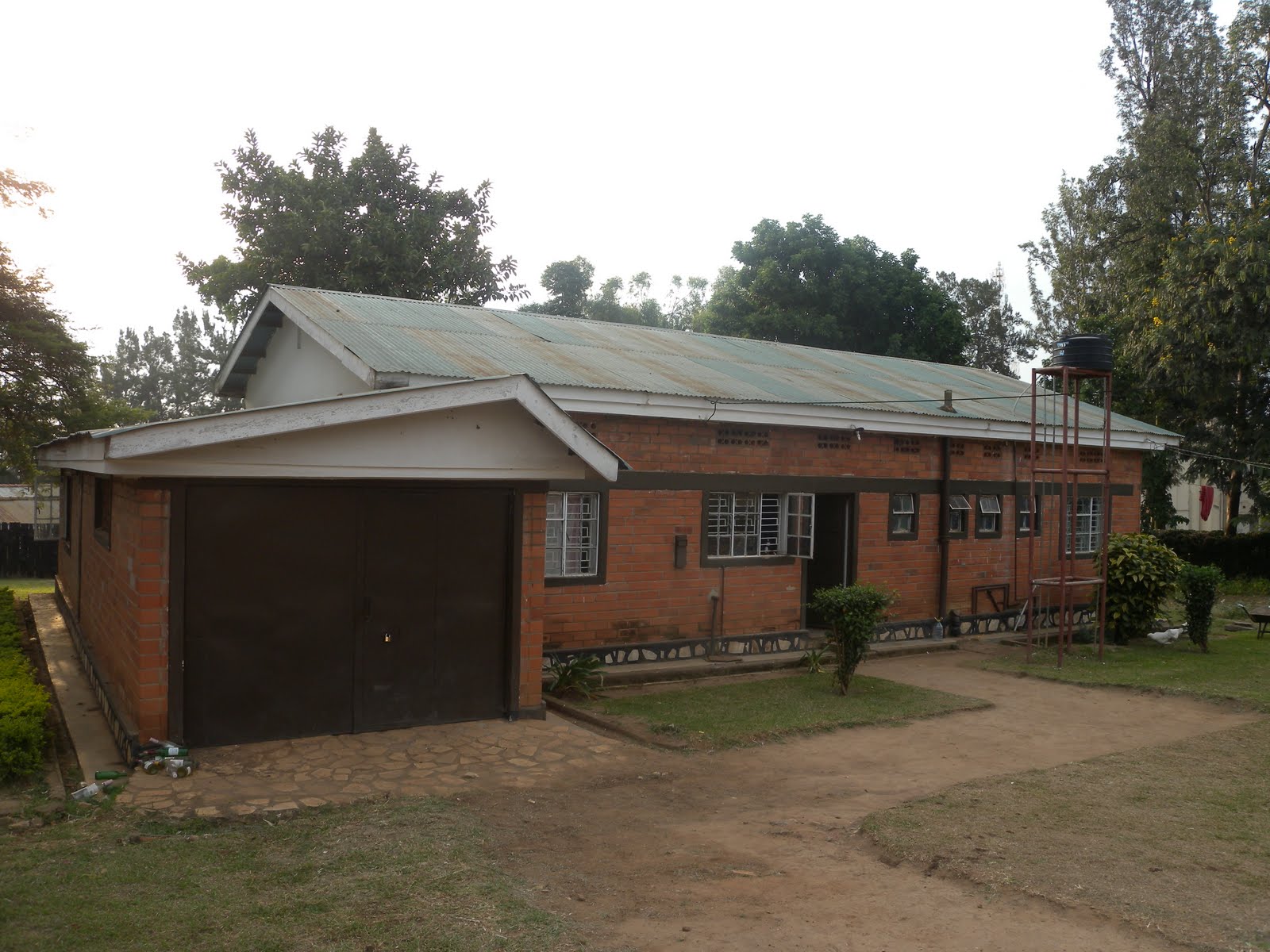
UNDP Intern House. AKA Big Brother Uganda


I will be sharing the UNDP intern house with 7 other people and we are sharing quite a large amount of goods. Water, gas, a bathroom, the fridge, cleaning. The first day in the house I asked the veterans (who usually due to their time in the house have more experience and rights than the rest of us: better rooms, better bed nets, better furniture) what the rules of the house were. The current chief of the house told me there where not rules, everyone just did what he thought would be more adequate, so I asked if they did not fear that the showering schedule would be a problem, or if the limited amounts of water wouldn't be rapidly exhausted if we did not set some limits. Also who would clean the bathroom? The answer is that they did not had any problems before.

I will exaggerate the situation for the purposes of this blog, anyhow if you read this far you are used to my style of writing and now I tend to exaggerate and play devil's advocate.

As a result for the past few days we are all rushing to the toilet from 6:30 to 7:30 to see if we can get the next spot under the shower. A bit inefficient... But what has started to worry me is the water availability, before we came the house had an average of 4 interns at any time, now we are 8. The first day I did the effort of showering in three minutes, turn the water off to put soap and shampoo and tried to wash the dishes with as little water as I could. But I have been observing the water practices of the others and realize that unless we set rules it is not worth to make such sacrifices. So today I took a nice shower of 4 minutes without turning the water to soap and shampoo myself.

This afternoon we ran out of water... A disaster in a toilet for 8 people, especially if it lasts more than a couple of hours. We could not cook, we had to eat out tonight. When we were coming back one of the guys that has been longer in the house mentioned we might want to get a bigger tank of water...

Micro tank of water.
I guess you could either see our situation as anarchy or maybe community management of resources, in any case the free rider threat looms over us now. I have been leaving with roommates for the past four years and up to now it has worked quite fine. But 8 people in the Big Brother house might be a little bit too much for my non-planning strategy. Two experiments under way:
1- Left my toothpaste in the bathroom - let's see if someone else finds it convenient to use it instead of buying their own.
2- I am really intrigued to see who will be the first to clean the bathroom and his motivations to it, as our cleaning/working for others limits are reached by each one of us, I wonder how long will pass until we make a bathroom cleaning schedule. Until then I will be analyzing the free rider dilemma on this aspect.

I am a terrible cook, so I have offered to do the dishes as often as needed (I am not the only free rider in the cooking sector), I hope that my wonderful cook colleagues consider my specialization useful (a specialty that is very hard to defend, computers, GIS and economics are quite useless in this situation, and black humor has little value also).

Oh! The water is back, I hope I can use it, I have to run... Drank too much beer (that it seems we never run out :))

domingo, 5 de junio de 2011

Versus

I am lying on my bed in Kampala city, the power just went off! Kibale Buzibo (No problem in Lugandan). It is just like those nights in Mexico right before the delivery of a project for school. You can't do anything. You get the candles from the kitchen, and think about the lives of previous generations and how they coped with life before electricity and in general cheap energy. I wish I was doing that right now, but the fan went off also and now it is kind of a furnace inside my mosquito net (adding some mexican exaggeration to the situation). 

Tomorrow the road into Terra Incognita will really begin, tomorrow I will travel to Mbarara, the second largest city in Uganda, some four hours west towards the famous rift valley. Nervousness is back, not only of what I will find over there, or how the experience might affect me. The main reason is that this internship was one of the main reasons to select Columbia's university program over the other alternatives I had in mind just one year ago. And now potential energy will be transformed into kinetic energy. It's sort of the feeling you get when you use a joker in a game and wonder if this was the adequate hand to throw it in or if you should have waited a little more to optimize the impact. This feeling of doubt, of second thoughts, are part of a double edged sword that has followed me for over ten years now. 

On one hand you avoid making mistakes due to too much security in the incorrect answer but on the other hand you are never too sure when you think you have found an answer. Before possibly hitting another wall in Ruhiira (The rural area where I will be working on Monday), I wanted to mention some of the controversies that I am constantly thinking of.

Climate Change versus Poverty Alleviation:

When I find myself in doubt I tend to come back to the main thought that got me out of my comfort zone. Our development paradigm and economical system has led us to a possibly irreversible impact on the Earth Systems that could prove fatal for our societies and their welfare. For many years, I believed that this is the main problem that needs to be solved, we have to reduce our negative impacts on the atmosphere, the oceans and biodiversity. Even if the costs of mitigating climate change appear to be a threat to our economic system, if we do not take swift action development and economic growth will be affected anyway. 

But, at the same time, cheap energy has allowed us to step into our modern style of life. Going back is probably not an option and in any case those who do want to support a reduction in the gains in GDP per capita achieved after the industrial revolution are probably committing political suicide. Hans Rosling and his TED talk on the wash machine opened my eyes, there are still 5 Billion people in the world that still wash their clothes by hand. He ends his very energetic presentation asking to environmentalists: you might stop using your car but how many of you have sacrificed your wash machine in the name of mitigation to climate change? I still believe that trying to reduce poverty can prove inefficient if the climatic crisis is not addressed soon. What is the point of building a dam in a river that runs dry because of climatic change? Climate change will affect those that do not have the means to invest in adaptation strategies, usually the poorest of the poor. This is quite unjust because the CO2 concentrations have been mostly affected by the richest groups in the world. This is the largest externality that we have encountered in the history of man. So what do we do about it.

Going further, not only is the subject of poverty important but in general we are talking about development. In order to truly solve the issue at hand we must aim at achieving sustained economic development. Protecting the environment will only be considered true sustainable development if there is space for continuous economic improvement of the livelihoods of the majorities in the world. Switching from fossil fuels to renewable energy will not be a walk in the park and nobody wants to pay for the broken dishes. We will not solve the environmental crisis with ethical goals of preserving the planet for future generations. We will solve it with market signals and government regulation. Internalizing the externalities in economic jargon. Or as some people are saying today: privatize the commons (common non-exclussive goods like the atmosphere, fisheries)!

I bought my government permit to see the Gorillas today, the Ugandan government charges 500 USD to have a one hour access to see the gorillas in some of the most amazing national parks. You can only pay these amounts by cash and you don't get full refund if you don't get to see the Gorillas. The deal is quite bad for the tourist and yet the national parks are fully booked for the summer (we got the last four places to do it). SO the willingness to pay for tourists is high enough as too maintain the market equilibrium at full supply (the government cannot create more gorillas). Of course the situation ends up being a government monopoly. They are the only ones that offer the service of seeing Gorillas, probably if they charged less the demand would be higher. Yes, this might be more efficient from an economic standpoint, but the Gorrilla populations and the environment they depend on would become damaged if the demand was higher. The outcome of this situation is that tourists complain but still pay, the government has a very large inflow of money that can be used for government expenses, the jungle is still there and the Gorillas too. So even it appears that the situation is not optimal from an economic viewpoint it seems that everyone gets what they want. In the end it seems like a quite sustainable solution to conserve the Gorilla species and their environment (Jungle). But this only works when there is willingness to pay for an ecosystem service, we are all interested in paying for services that will provide us with water, paying for pollination services will probably be in our best interest. What happens in the case of the Polar Bear for example, melting the poles will result in more oil fields and faster shipping routes. The willingness to pay of society to conserve Polar Bears and their environment will never be higher than the profits to be made from this changes in global trade.

To wrap up this idea, I find that it is quite hard to tell poor people to stop cutting their trees when they depend on them to cook and heat themselves. Sometimes environmentalism can be lethal to the poorest of the poor. But in the long run they will die anyway if they loose all of their forests. See the case of Haiti that deforested all of its forest and has now severe issues of erosion, soil impoverishment, landslides, lack of water and soil degradation. The impacts have been tragical, so back to the question in what amount should we invest both in the environment and poverty alleviation. (I did not speak about distribution or consumption of those who are above the airline (see Hans Rosling--- can be seen as the rich people) because that is another subject that I will not be working on in Ruhiira, but think on the following: can there be infinite growth in a planet with limited resources? Can we have a linear system of production/consumption that will allow for constant growth of GDP per capita?).

Sustainable Development against Humanitarian Aid

This subject might take ages to cover and I want to be brief. Humanitarian Aid is focused on short term interventions to "stop the bleeding", they tend to send doctors and other personnel to areas that have been stricken by disasters, conflicts or other calamities. They are like a band aid on the wound but usually never go into the root causes of the wounds. Why did the country enter a hunger episode? Why where they not ready to cope with it?

Usually the answer has to do with poverty, and solving the root causes is much harder and less glamorous than sending quick relief to suffering populations. I am quite sure that young doctors working for MSF are more attractive than bureaucratic personnel from UNDP. It is more romantic.

But I believe that marriages live long not only because of the romantic details and the dramatic passion that usually help movies to become blockbusters. Intense, romantic affairs attract us more than dull histories of couples that sacrifice and work everyday to make their marriages last. Yet marriages last because of hard work and perseveration. Development works in the same way, yes you need to intervene when the hurricane/earthquake destroys the city but the long term work is for me as important. In this sense, I find that long term projects designed to address in a holistic manner the root causes of poverty are much more attractive than the short lived emergency action interventions. 

My work starting on monday will be to collect all the geographical data from the project to measure access to services and perform spatial analysis to detect areas that are underserved by infrastructure and coverage in sectors like health, education, water, energy, sanitation, agriculture, business development. It is not the romantic job in the field saving lives but it is as important, a backstage job measuring and analyzing to provide with long term decision planning strategies to have a long lasting impact and work towards sustainable development.

The following table will be self-explanatory on the reasons that I selected Subsaharan Africa as the region to start my analisis on the poverty alleviation side. 


jueves, 2 de junio de 2011

To Uganda? For what?

Bicycles in Kampala
This was one of the questions that many of my friends, family, ex-classmates and ex-colleagues asked me.

Why are you going to Africa if there is so much poverty in Mexico? Some comments where bordering in the aggressive, even insinuations of national betrayal and lack of interest for my country where thrown at me. Although I am past this it still makes me bubble in the inside, it is almost like the arguments used by climate skeptics in the U.S. Hard arguments using sophist techniques coming from greek times (Zeno's paradox) that are quite tricky to demonstrate using a logic that the other denies.

Why go to the moon or mars if we care about the Earth? The reason is easy, to understand the Earth you need to compare to other planets. In the same way, to truly understand the problems of my country, my city, my neighborhood you need to compare to other countries, cities, neighborhoods. And I have to say that Kampala is very different than Mexico City, than New York or Paris (three cities that I have had the luck to live in and to study in detail).

After more than five year working in retail network management and optimization, I slowly had to truly understand city dynamics. Urban planning and urban development (different concepts because cities are living animals and they grow faster than you can plan) are basic elements that relate to the sustainability of a city. Kampala would not exactly fit in my definition of a sustainable city. It is quite obvious that the city has been growing out of control when you see the way the roads have been carved into the city. There is no public transportation system, no public lighting system, no traffic lights, no pedestrian crossing, no traffic signals, the street level pollution is even worse than my fading memory of that Mexico city's winter of 1991 where birds started to drop dead on the streets. At night the city becomes frankly grim, not a single public lumen to show you the way.


The market.

Llevelo Llevelo! No gracias! Neda Neda Webale!
The chaos in the city and the levels of poverty have led citizens to adapt and small motorcycle sprawl from every corner honking like crazy. They are infinite in number and are frankly dangerous for everyone, in two days I have seen people carrying motorcycles on a motorcycle, 5 people on one single bike, and the list can be long. This was my first impression after just two days walking across the city.


As one of my colleagues from the master put it blogs tend to be pompous, serious or filled with wanna be intellectual posts. Or on the other side of the spectrum just a myriad of details about one's own private life that usually are unattractive to any one else. I should start here with the antithesis and mention that despite all these facts Kampala is a bustling city, full of energy that makes you vibrate at the rhythm of eastern africa development. SIPA has tried to teach me that, cynicism is not an appreciated trait. But I am not going to do it... You can read lonely planet to get the pat in the back version, there are plenty of optimistic people in the world and I am not one of them. I like to point out at the stains.


4 X 1
What needs to be done in Kampala to tend to sustainability. I wouldn't know where to start. The city is growing at a rate of 5%  per year. This means doubling the population every 12 years! already the city counts 2 Million inhabitants and is a complete disaster, planning will be a basic component of the strategy. For a city to become livable, citizens need to be involved in the livability of the city. When you are worried about your next lunch it is hard to worry about the quality of your air or the area of parks per inhabitant. Rates of 128 per 1000 under five mortality are indications that Uganda is in a different stage of development than other countries (France 4, Mexico 17, Nicaragua 26, Dominican Republic 32, Kenya 84, Haiti 87, Niger 160, Chad 209). Kampala does not need programs to promote the use of bycicles  (which actually everyone uses right now). But not everything is lost. Remember that in 1960 the under five mortality rate in Mexico was 137. 

Chewing some air
Mexico managed to reduce its children mortality with a series of governmental interventions, technological diffusion, health system improvements and behavioral change of the population (family planning). My fellow country men, think twice before cursing our health system as useless. Now Mexico city is also changing on the sustainable path, a new proposal to transform the roads that cover the once freshwater rivers that crossed the city is being analyzed. At a certain point in time the rivers needed to be wrapped in tubes and roads built on top of them for public health and traffic issues. Now we are realizing that more roads do not mean less traffic and that water is a precious resource to just use use it to carry our shit.

So in Kampala too, it appears that things will have to get worse before they get better. Planning and some important public infrastructure will be required. Hopefully Kampalians will at some point start to love their city and try to make it a better place by respecting basic civility agreements. In the meantime, be prepared for the hassle.

Boda Bodas everywhere
If I had lived all my life in Kampala, I might think that things are the way they are and can't be changed. If I never left Mexico I might think that all problems are solved with the same stone. Going outside your confort zone and realizing that different cultures are trying to solve sustainable development issues in different ways can only create synergies.

This among other things is what brought me to Uganda...

Again into Terra Ignota.
Utopian Kampala

domingo, 1 de mayo de 2011

Are simulations useful?

I am taking a class called Human Ecology, the class is taught by Jeffrey D. Sachs. I love the class although I feel there is much disorganization in the materials and we don't go into the level of depth into each model as we should. The class is very theoretical and studies the interactions between the economy and natural ecosystems.

The class is hard. Most students don't like the class due to its theoretical content. I understand why they don't like the class. But I love the class. I remember why I came to Columbia because of this class.

Our last problem set made us study three trends:

1- The population growth projections:
2- The GDP per Capita projections:
3- CO2 Emissions per Capita projections:

Question k of our final problem sets says:
Are simulations of this kind useful? What are some key elements that are missing from this simulation? How would you change it to improve it?

As a joke some of my classmates mentioned that this simulations are not useful and that we should be investing our time in action more than models.

I think that in some aspect they are right, these simulations are so over simplified that they can lead to wrong decisions. This is my poorly written answer of a sunday night:


The exercise of simulations is very important to make smart policies that avoid perverse effects. Intuition and opinion-based decisions are often well intended but lead to huge mistakes. For example, in the case of subsidies in water and energy for agriculture in Latin America in the 70’s that was intended to help smallholder farmers modernize their agricultural practices. The long-term results of these policies have led to market distortions that have helped the richer landholders and dis-incentivized modernization of small-scale agriculture. Close monitoring of key indicators, and models can help to identify the perverse effects of poorly designed public policies before it is too late to correct them. Plotting business as usual scenarios can help to understand and forecast the outcomes of inaction. Decision-makers need to rely on this type of simulations to avert disastrous outcomes and correct trends to effectively reach desired outcomes.

This simulation has strong limitations; it does not take into account the important amounts of uncertainty that exist about earth dynamics. CO2 sinks are not considered in this simulation and that is a very important aspect of the climate change policy.  Also the simulation fails to consider that there are actually different types of energy intensities to GDP per capita and also different levels of carbon intensities to energy use. Although some European countries have the same GDP per capita of the United States, the differences in consumption behaviours leads to large differences in actual per capita emissions that this simulation is not considering. Americans tend to have more energy intensive consumption behaviour than some very rich European economies that have a less intensive use of resources. On the same line of thought, even if two populations use the same amount of energy per capita per unit of GDP per capita, the amount of emissions of CO2 required to produce the energy have a great amount of variability. Indeed the emissions released per kilowatt of energy produced with coal, oil, nuclear or biodiesel have different carbon intensities. It is not the same to compare for example a country like the US, China or Australia that rely of highly inefficient use of carbon based power plants to for example the natural gas or nuclear power plants that Europe and other developing countries are currently using.

A third problem of these simulations is that they are based on the past behaviour of societies and are just an extrapolation of past trends. The danger of such simulations is that it fails to consider events that have not yet happened. The colloquial “black swan” concept that you cannot predict what has not happened is a great limitation of linear simulations. In this sense today’s computer power and artificial intelligence algorithms can help us to make models that take into account uncertainty and non-linear relationships. Simulations that take the complex-systems approach are much more likely to forecast scenarios closer to future reality. The only problem is that by doing this the results from the model will probably be a range of possibilities and that can lead politicians to mistake the uncertain nature of the climatic crisis with a lack of scientific knowledge of what is really occurring. In the end the quality of simulations has to go hand-in-hand with the quality of our politicians and decision-makers.


Some additional trends that scare me:


So! What should we do? Do we know where we are going? Do we want to go there? I am unsure but it seems it is terra ignota...

jueves, 28 de abril de 2011

A tale of conferences: Economists, Scientists and Policy-Makers. Part I -Discounting the future...

These weeks have been very particular, I attended some conferences that were particularly stimulating. Weeks like this do not happen regularly, even in the world of Ivy-League Schools.

As the world approaches 7 billion inhabitants and evidence of a warming climate accumulate, we are approaching the inevitable: Action. It is clear to me that there is something not quite right in our paradigm of progress and development. That certainty brought me to Columbia, made me borrow amounts of money that I still feel uneasy to think about. I remember a conversation that I had some years ago with my father, I came to him with my never-ending concerns about the possible impacts of climatic change in the future of our species. He said to me that I should not worry so much about it and that the world would find a solution and solve it sooner or later. Some time later a colleague at work told me that I worried too much, in the end we could be hit by a meteorite anytime and life would probably be wiped out of earth anyway, "just enjoy your life and don't worry as much" - were his words. Later on, a professor that I respect enormously, explained to me that when he was younger he also lived in fear of nuclear war that could destroy the world. He wasted so much energy worrying for something that never happened and in the end he would have used that time to do more productive things. I guess they were trying to escape from my stubborn conversations about the path for change. In the end I quit my job, left my country, burdened myself with debt, hoping that I could help the world find a solution to some of its major issues. When I first came to Columbia I hit a wall, I was looking for answers and more questions arose. Little by little I have managed to structure my experience into something tangible. Today I found the first step of the ladder...

So let me try and convey to you my line of thought. The threat of industrial overshooting is growing every day. As the flows of Green House Gases increase and the atmospheric stock accumulates the future scenario for world stability looks grimmer. If we do not manage to control our impact on the planet we will have to suffer the consequences and adapt to an world of climatic extremes and impoverished ecosystems. So what are we supposed to do about it? The answer has to be responded in several levels, first is the understanding of the possible impacts and the technological solutions for mitigation and adaptation, this is the job of scientists and engineers. Then comes the problem of how much do mitigation and adaptation strategies will cost, how much we will benefit from it, this is the job of Economists. Finally comes the question of who will pay, who will benefit and how should we tackle the issue, this is the job of Politicians, Policy-Makers and this involves private corporations, the general population and international organizations. It appears we are facing a global problem of collective action on our largest shared common good: the atmosphere. And it also appears that we are failing at constructing an adequate plan of action. I sometimes feel that we are behaving irrationally, I find so many common aspects with the collapse of Easter Island that Jared Diamond explains in his book Collapse that I am afraid we might act when it is already too late. Why are we failing? What can we do about it? I went to listen to the brightest minds in Columbia and Harvard to obtain some answers. Economists, Scientists and Politicians are currently debating this issues and they certainly know way more than I do. So let me tell you what I learned.

Conference 1: Fourth Arrow Lecture, Time and Persons in the Economics of Climate Change. Dasgupta, Stiglitz, Barett, Healy and Arrow. April 12th 2011. Columbia University.  

Climate Change is the perfect example of the management of a common good, the perfect setting for the biggest market failure of all times. It is an issue of global collective action that will require a global deal from all nations in the world. At least in this conference everyone agreed that climate change is a reality and that it could have negative impacts on GDP. But the question is how much should we spend on this problem? 

And here starts the nightmare, since we humans live in an uncertain world, we prefer the present to the future. Future possibilities are discounted because we expect the future to be uncertain and in the case of the economy we expect to obtain more from our investment. So any future gains have to be discounted to present values. If we play with the value of the future then we might find that action is not imminent. That we should perhaps wait until we get richer to start acting to reduce our impacts on the planet. 

The question seems to be how much will future generations pay us for taking a sacrifice in the present from which we will not see the benefits. Indeed tackling climate change today would require to reduce consumption in the present so that future generations can be richer than they would be if the suffer the future damages of today's emissions. Some argue that we are poorer than our future generations and that we would actually be transferring money from the poor in the present to the rich of the future. Yes, this is part of the debate amongst economists, economists disagree on the discount rate of the future and thus arrive to different conclusions on how much we should be doing about this issue. 

I think this is quite a crazy idea, but hey I am not an economist. (Actually economics was to me another area of Terra Ignota to me until recently)

But economists have come to the conclusion that the economics of climate change need to also consider risk. Yes, there is some probability that if we allow concentrations to exceed a certain threshold the impacts on the World could bring consumption to 0. We of course don't want this. But what is this probability? We don't know, scientist are doing the best they can to define this probabilities. In the mean time economist are modeling their discounts models with the probability of catastrophe (thank god!).

But discounting the future has several ethical issues, we are basically saying that future generations have less value than the present one. I call this discrimination.

But one point that struck me was that indeed we have to decide how much we are going to spend on on reducing climate change. The money we spend (not invest) on this issue is money that we can't spend on other issues (like consuming). But if we are uncertain about the temperature change and the damages of these increases then what should we do? Some politicians argue that we should wait until we have more certainty. But the problem with this is that by the time we know it might be too late. If the doctor tells you that you have a tumor that has a 10% chances of being cancer would you risk it until its too late?

So while economists debate about how much we should value the future, some scientists are talking about the end of civilization. One quote from the conference was: "Extinction is not infinitely bad". This is one of the ideas that the best minds of our world have come up with... Should we be worried? You bet!

It appears that we are underestimating the real costs of Climate Change in all this discussion. If we actually reach a catastrophic scenario then the costs of inaction are close to infinity, at least that is what I believe. But in this economic discussion there is no room for this sort of ethical discussion, we should abate emissions until the marginal cost of emissions abatement is equal to the marginal social benefit of abatement. Economist work at the margin, but again we don't know these costs, we won't know these costs until it is too late. The truth is that the today the marginal cost of emitting carbon is still 0. Countries are not really doing anything to abate their emissions, countries have indeed agreed that we should avoid a warming of 2 degrees but the problem is that we need to define who will start abating. And since it is a collective action issue everyone is responsible or more precisely: no one is responsible!

At some point in the discussion, a nobel laureate decided to mention that the discounting discussion is a stupid controversy. If we had 100 planets then let's look at the average, let's measure the migrations costs from one planet to the next and if scientist are not wrong then we move to the next planet and reduce emissions. I wanted to laugh but the subject is too sad for me.

Let's take the example of Japan, the had modeled all possible scenarios and had everything under control. But the low probability, high impact event did happen. And now? Now what? 

The truth is not only that we are really bad at dealing with low probability events, the problem is that we are waiting until the catastrophe becomes highly likely before deciding on taking action.

I came to Columbia to find the answers to what needs to be done about the threats of the environmental crisis that we are facing. I have learned that this environmental crisis is not only environmental but that it is highly linked to development. If we act we will hurt our development, if we don't act we will also hurt our development. If we develop we will make the environmental crisis worse. It seems we are in quite an impasse. No one wants to make the first move, developed countries don't want to take action and loose their supremacy to the new rising economies. The new rising economies don't want to give up on their big moment, the time for them has come and now they have to sacrifice for the sake of the planet. 

In the end those who will suffer the most are again the poorest of the poor, those who don't emit will be the first to suffer from climatic variability and natural extremes. I guess that humanity will demonstrate what we are really made of in the way we solve the climate change crisis. It seems that indeed extinction is not infinitely bad... Especially when the first to become extinct are other species and poor nations...

It seems that we are not on the path to sustainable development, and it is not clear to me if economists have the answers to the problems we are facing...

Maybe scientists have something to say...


See part II

viernes, 8 de abril de 2011

Environmental Sustainability and Poverty Alleviation. Is there a trade-off?

As I was preparing myself for my Macroeconomics Exam, the question hit me again. Why am I trying to learn all this material? Is it helpful to mildly understand how the economy of a country is supposed to behave? Am I learning something that is actually proven or is it just one theory to help justify a flawed paradigm of reality. I ask myself this question often because one of the main reasons that brought me to this city, the heart of the western world, New York, was the idea that there is something completely wrong in the way our species is behaving in the planet. We seem to be degrading the planet, harming a phenomenon that until now is exceptional and has only been found in one planet: life. It seems that we cannot value biodiversity and the earth systems that fuel our economy. And after almost one year in Columbia University, I have learned that biodiversity is not productive, we need to make some trade-offs if we want to keep development functional. When I first came I thought development was the problem, GDP was the problem, private corporations and profit maximization were the problem, developed countries were the problem. Today I realize that I would not have lived the life that I have without all of these things and indeed I should be grateful. I now understand that the things I considered to be utterly wrong are in someways a better alternative to the other options. Markets are valuable in a very important way, government regulation can produce more harm than good, especially when corruption is present all across the society. But still... 

Markets fail, they fail for several reasons... Asymmetrical information, externalities, common goods. The clearest example of market failure is Climate Change. For me it is the challenge of our generation, with the other environmental problems, we will need to find a solution fast. But there is a very hot debate going on about these subjects. Climate Change, Ocean Acidification, Loss of Biodiversity, it seems that they are not as important when we compare them to sustained economical development. Trying to reduce our impact would entail a slowing down in our economies that could prove fatal to the levels of wealth and progress we have achieved. And there are still more than 5 Billion humans that want to have a taste of this improved lifestyle. Who are we to say no? I am not talking about the charade that some pseudo-scientists hired by some pseudo-politicians payed by some corporations to try and convince us that climate change is not a real threat and it is only a climatologist conspiracy to put Al Gore in the White House. No, I am referring to the the  argument of poverty alleviation and sustainable development. It seems a bit selfish when we worry about other species and still 1 Billion humans go to bed hungry. It also seems that given the current trends, future generations will be richer than our, and that reducing consumption today would be unnecessary and even counterproductive in the long-run. First because by continuing to develop we will accumulate more capital that future generations will profit from, if we stop developing we will actually be reducing their capital and their technology. Secondly because since they will be much richer than us, it would be unnecessary to reduce consumption today. Especially if people are dying of treatable diseases today...

I do not agree with these arguments, and I still believe that we need to stop fooling ourselves and start to behave as a responsible specie, protecting the natural capital of our planet because of the intrinsic value that earth systems and life have. Not just for future human generations but as an ethical value, because the marvels of this planet up to now only happen in this planet. We need to learn to control ourselves. Poverty is not an issue of unfulfilled development, it is an issue of inequity. But these ideas go against the current canon of thought that occurs in the international affairs stage. The UN states that sustainable development requires to achieve environmental sustainability and poverty alleviation at the same time.  China, India, Brazil will not stop their development now that it is their turn to become world superpowers. And I understand it. I don't agree with it, but I guess that I have had to learn to listen to these valid ideas. (Again not the climate skeptics or those that believe that worrying about the environment is childish). I am talking about those that believe that we also need to concentrate on the life fulfillment of humans across the planet. That I agree to discuss...

This post is about those ideas that make me doubt in my conviction that we need to tackle the environmental crisis headstrong. I find the following TED Talk to be instructive  and present an argument that made me reconsider my position. 

The talk is given by Bjorn Lomborg, he is the author of a very controversial book called "The Environmental Skeptic" and although I am not a tremendous fan of of him, the Ted Talk he gave does make some points I had not considered. He uses the tool of Cost-Benefit Analysis to rank which should be the key problems that humanity should tackle first. His conclusions made quite an impression. From wikipedia:


"Lomborg's main argument is that vast majority of environmental problems such as pollution, water shortages, deforestation, and species loss as well as population growth, hunger, and AIDS, are area-specific and highly correlated with poverty. Therefore, the problem is essentially a matter of logistics and can be largely solved by economic and social development. Concerning problems that are more pressing at the global level, such as the depletion of fossil fuels and global warming, his argument is that these problems are often overstated and the recommended policies (Litany) are often inappropriate if assessed against alternative policies"
Bjorn Lomborg argues that when economists use the tool of cost benefit analysis applied to the list of challenges that humanity is facing including elements such as Climate Change, AIDS, Malnutrition, Access to Water, Free Trade limits, Governance and Corruption. The idea is quite interesting, I have gotten myself into very complicated discussions when trying to explain why solving the climatic crisis should be a priority to some of my colleagues who consider that women empowerment, food security, education, social entrepreneurship and poverty alleviation are much more pressing than the uncertain threats caused by the environmental degradation and pollution. These conversations have made me reconsider my position on the importance of the climate challenge. I can even remember in a lecture by one of France's most recognized policy researcher on climate change mitigation a very uncomfortable moment. She mentioned that it's not just about the "climate nerds" and that climate change might be only the hot topic for a while. Indeed if carbon sequestration is possible, it might be that the problem will be rapidly solved. At least that is what one eminent professor in Columbia argues. I have talked with other experts on the subject, who mention that the idea might be feasible, capturing atmospheric CO2 directly from the ambient air, put it underground and solidifying it, but the problem is the scale at which we would have to do it. So apparently there are no clear answers.

When you consider the cost of interventions and the possible benefit, according to his expert panel of economists, climate change is by far the less urgent item on the list. By spending much less money, we could actually start solving issues like the AIDS pandemic in Africa, Malaria in Africa and South Asia, Micronutrient deficiencies all around the world and elimination of subsidies in the developed countries that affect the business activities of poor countries when they can't produce at the distorted prices (think of corn in the USA). It makes a hell of a lot of sense. It doesn't mean we shouldn't work on the environmental agenda but if we can't solve issues like these then what is the future of the climate negotiations. In recent years the Global Fund and PEPFAR have actually started combating AIDS and Malaria in Africa and the results can be seen in the statistics. So we can solve these issues, it's just about the political will. If as Lomborg says these problems can be solved quickly with existing technologies, I have to say: "let's do it".

That justifies my summer in Uganda, in one of the Millenium Villages where proven interventions are being provided in an holistic manner to bring a village cluster out of the poverty trap. I will try to find some answers to my questions.

I found this in an article written in the Copenhagen Consensus Center facebook's page. It is a think-tank in Denmark that publicizes the best ways for governments and philanthropists to spend aid and development money. And was founded by Mr. Lomborg. The article ends with the following ideas:


Lomborg notes that the world still depends on fossil fuels for more than 80% of its energy. “What will developing countries use to power their economies if they can’t burn fossil fuels?” he asks. “Alternative energy technologies like solar, wind, and geothermal power all have great promise, but they are nowhere near ready to shoulder that kind of load.”

“Those who put their hopes in the Copenhagen summit will be bitterly disappointed. But this failure could be a blessing in disguise, if it jolts politicians into recognizing the deep flaws in their current approach, and chart a smarter course”, says Lomborg. “Until now we have put the cart in front of the horse by promising carbon cuts before alternative energy is affordable.”

Lomborg argues that if governments are serious about wanting to solve global warming, they should massively increase spending on green-energy research and development. “We should increase the amount we spend on green energy R&D by a factor of fifty, to $100 billion a year – or 0.2% of global GDP. This would be more than enough to bring about the kind of game-changing technological breakthroughs it will take to make green energy cheaper and fuel our carbon-free future.”